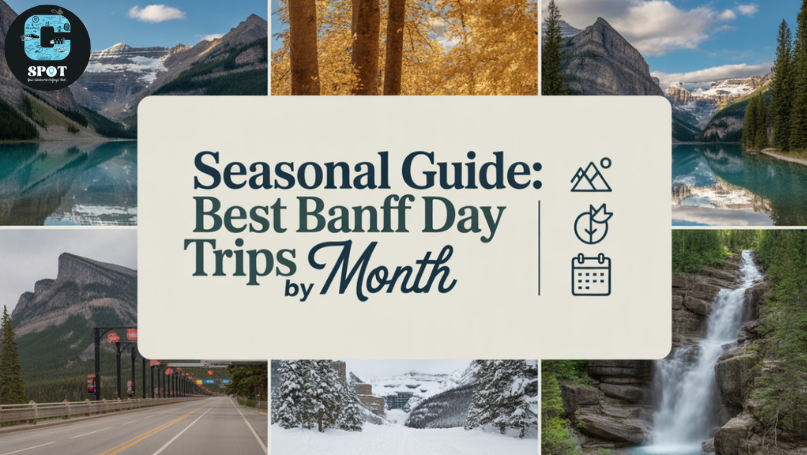
Banff National Park, in the heart of the Canadian Rockies, offers breathtaking landscapes, alpine lakes, and vibrant wildlife. Exploring the park through Banff day trips allows travelers to experience its beauty even if time is limited. Each season presents unique opportunities, from snowy winter trails to colorful autumn vistas. Planning your visit according to the month ensures you make the most of every excursion.
This guide details Banff day trips by month and includes essential tips on trails, wildlife, accessibility, and photography to help you enjoy the park fully.
January – Winter Wonderland
January covers Banff in snow and ice, offering serene vistas for those seeking quiet winter scenery. Banff day trips focus on safe, accessible routes and iconic winter attractions.
- Frozen lakes are ideal for photography and gentle strolls.
- Johnston Canyon ice walks let visitors see frozen waterfalls safely.
- Banff town offers cozy cafés and scenic streets for a relaxing stop.
Winter trips are ideal for families, seniors, and travelers who enjoy calm, snowy landscapes.
February – Ice and Wildlife
February brings longer days and slightly warmer weather. Wildlife is more visible, and trails remain accessible for safe excursions. Banff day trips in February combine winter adventure with wildlife spotting.
- Early morning drives along Bow Valley Parkway may reveal elk and deer.
- Sulphur Mountain gondola provides panoramic views with minimal effort.
- Ice walks give close-up views of frozen waterfalls.
Photography enthusiasts often find February perfect for capturing winter reflections and pristine landscapes.
March – Transition to Spring
As snow recedes, March opens up more trails and lakesides. Banff day trips during this month are a mix of winter tranquility and early spring vitality.
- Lake Minnewanka offers reflective waters and gentle lakeside walks.
- Short canyon trails begin to clear for safe exploration.
- Wildlife activity increases as animals prepare for spring.
March provides moderate weather for easy hikes and photography without the summer crowds.
April – Early Spring Charm
April sees Banff coming alive with greenery and melting snow. Day trips become more accessible, with lakes, waterfalls, and viewpoints offering early spring beauty.
- Partial lake thaws create photogenic reflections.
- Lower elevation trails are ideal for leisurely walks.
- Early wildflowers add color to the landscape.
April is perfect for visitors who prefer quiet trails and tranquil sightseeing.
May – Blooming Landscapes
By May, spring is in full bloom. Banff day trips become more versatile, with hiking, lakeside walks, and canyon explorations fully accessible.
- Johnston Canyon waterfalls roar with snowmelt.
- Lakeshores offer gentle walks and picturesque views.
- Alpine meadows showcase fresh wildflowers.
Longer days allow visitors to explore multiple destinations comfortably in a single trip.
June – Early Summer Adventures
June brings warm weather, open trails, and vibrant flora. Banff day trips are perfect for combining hiking, scenic drives, and wildlife observation.
- Scenic highways offer multiple pullouts for photography.
- Short hikes reveal panoramic mountain views.
- Boat rides on lakes like Minnewanka provide a peaceful alternative to hiking.
Wildlife is abundant, and early summer flowers create vibrant landscapes.
July and August – Peak Summer Splendor
Summer showcases Banff’s most vivid landscapes, with turquoise lakes, colorful meadows, and long daylight hours. Banff day trips during July and August offer full access to trails and scenic viewpoints.
- Start early to beat crowds at popular spots.
- Carry water, snacks, and sunscreen for comfort.
- Wear sturdy footwear for safety on trails.
Summer is ideal for combining sightseeing, photography, and short hikes into a single, memorable day.
September – Autumn Colors
September marks the arrival of golden foliage and calmer trails. Banff day trips in this month highlight larch forests, quiet lakes, and active wildlife.
- Drive along mountain passes to admire autumn colors.
- Short hikes provide access to colorful valleys.
- Lakes reflect surrounding peaks, perfect for photography.
Fall offers a peaceful, visually stunning experience with fewer tourists than summer months.
October – Crisp Autumn Serenity
October provides crisp air and fiery foliage, ideal for scenic drives and short walks. Banff day trips focus on immersive autumn experiences.
- Canyon walks reveal colorful landscapes.
- Lakeside trails offer serene reflections.
- Roads and viewpoints remain accessible for safe exploration.
Visitors enjoy vibrant scenery with a calm and contemplative atmosphere.
November – Quiet Scenic Escapes
November is the transition into winter. Snow dusts the peaks, while lower trails remain open for gentle walks. Banff day trips in November are ideal for peaceful drives and lakeside photography.
- Scenic drives provide panoramic views.
- Quiet lakes make photography rewarding.
- Trails offer calm exploration before winter fully sets in.
December – Winter Magic
December turns Banff into a winter wonderland, with snow-covered peaks, frozen lakes, and festive town lights. Banff day trips focus on accessible winter sightseeing and gentle excursions.
- Frozen lakes offer unique photography opportunities.
- Guided ice walks allow safe exploration of frozen waterfalls.
- Banff town provides cozy stops between outdoor adventures.
Winter trips are perfect for travelers seeking magical snowy landscapes and tranquil experiences.
Best Trails for Banff Day Trips
While seasonal considerations are important, some trails and short excursions are popular year-round:
- Johnston Canyon: Offers accessible trails to waterfalls and the Ink Pots.
- Lake Louise Shoreline: Gentle walks with spectacular lake and mountain views.
- Bow Valley Parkway: Scenic drives with wildlife spotting opportunities.
- Moraine Lake: Iconic views with short, accessible trails around the lake.
These locations are suitable for families, seniors, and casual hikers while providing unforgettable scenery.
Wildlife and Nature Tips
Wildlife is one of Banff’s main attractions. Observing animals safely enhances any Banff day trip.
- Maintain a safe distance from elk, deer, and bears.
- Early morning and late evening are best for spotting animals.
- Binoculars enhance the experience without disturbing wildlife.
Respecting wildlife ensures safety and preserves the park’s natural beauty.
Accessibility Considerations
Banff is committed to making its parks accessible to all visitors. For comfortable day trips:
- Many lakes and viewpoints have paved or well-maintained paths.
- Gondolas provide elevated views without strenuous hiking.
- Winter months may require guided ice walks for safety.
Proper planning ensures a smooth experience for seniors, families, and travelers with mobility concerns.
Photography Tips for Day Trips
Banff is a photographer’s paradise. Tips for capturing the best moments include:
- Visit lakes early in the morning for reflective water shots.
- Use wide-angle lenses for panoramic mountain views.
- Capture wildlife from a safe distance without disturbing animals.
Seasonal light and clear skies enhance the beauty of your photographs.
Final Thoughts
Banff National Park offers experiences that change with every season. From snow-covered winter trails to vibrant summer meadows and golden autumn vistas, planning your Banff day trips according to the month ensures you experience the park at its best. For travelers seeking comfort, guidance, and a stress-free experience, BlackBus offers specially designed tours that make exploring Banff accessible and enjoyable throughout the year. Book your trip with BlackBus and enjoy every seasonal highlight without worry, at your own pace.